

Which Open Source Tools Can Help Us with Vibe Coding in Cybersecurity?
Getting into the game—for pretty much free

This issue was brought to you by JupiterOne.
The emergence of large language models (LLMs) has transformed software development. What began as code completion and documentation assistance has evolved into a new development paradigm often described as vibe coding: a workflow in which developers express intent in natural language and allow AI systems to generate, modify, test, and sometimes deploy software on their behalf.
In cybersecurity, vibe coding presents both opportunities and risks. Security professionals increasingly use AI-assisted development to automate repetitive engineering tasks, generate proof-of-concept tooling, create detection rules, build integrations, and accelerate vulnerability research. At the same time, AI-generated code can introduce vulnerabilities, propagate insecure patterns, and create new attack surfaces if not properly governed.

Three scanners. Three verdicts. One CVE. JupiterOne UVM unifies every scanner, dedupes by asset, and tells you who owns it.
For cybersecurity practitioners, the question is therefore not whether AI-assisted development will become part of the workflow. It already has. The more important question is which open source tools can support secure and transparent vibe coding practices while maintaining the visibility and control required in security-sensitive environments.
Understanding Vibe Coding in a Security Context
The term “vibe coding” typically refers to software development where developers describe desired outcomes rather than manually implementing every component. Instead of writing hundreds of lines of code, a practitioner might prompt an AI agent: “Create a Python utility that parses Suricata logs, extracts suspicious IP addresses, enriches them with threat intelligence data, and exports the results to Elasticsearch.”
The AI generates the implementation, while the human reviews and validates the output. In cybersecurity, this model is particularly attractive because practitioners often work across multiple programming languages and infrastructure platforms. Security engineers may need to switch between Python, PowerShell, Go, JavaScript, YAML, Terraform, Sigma, KQL, and Splunk SPL within a single project.
AI-assisted development reduces the cognitive overhead associated with these transitions. However, cybersecurity environments impose stricter requirements than general software development. Generated code must be evaluated for:
Secure coding practices
Supply-chain risks
Data leakage
Prompt injection vulnerabilities
Privilege escalation opportunities
Regulatory compliance
Research continues to highlight these concerns. Studies examining developer perceptions of AI coding assistants identify recurring concerns regarding insecure code generation, data leakage, licensing issues, and adversarial attacks such as prompt injection.
Similarly, NIST’s guidance on generative AI development emphasises that AI-enabled software workflows must be integrated into established secure software development practices rather than treated as independent systems. Consequently, open source tooling becomes especially attractive because organisations can inspect, audit, modify, and self-host these systems.
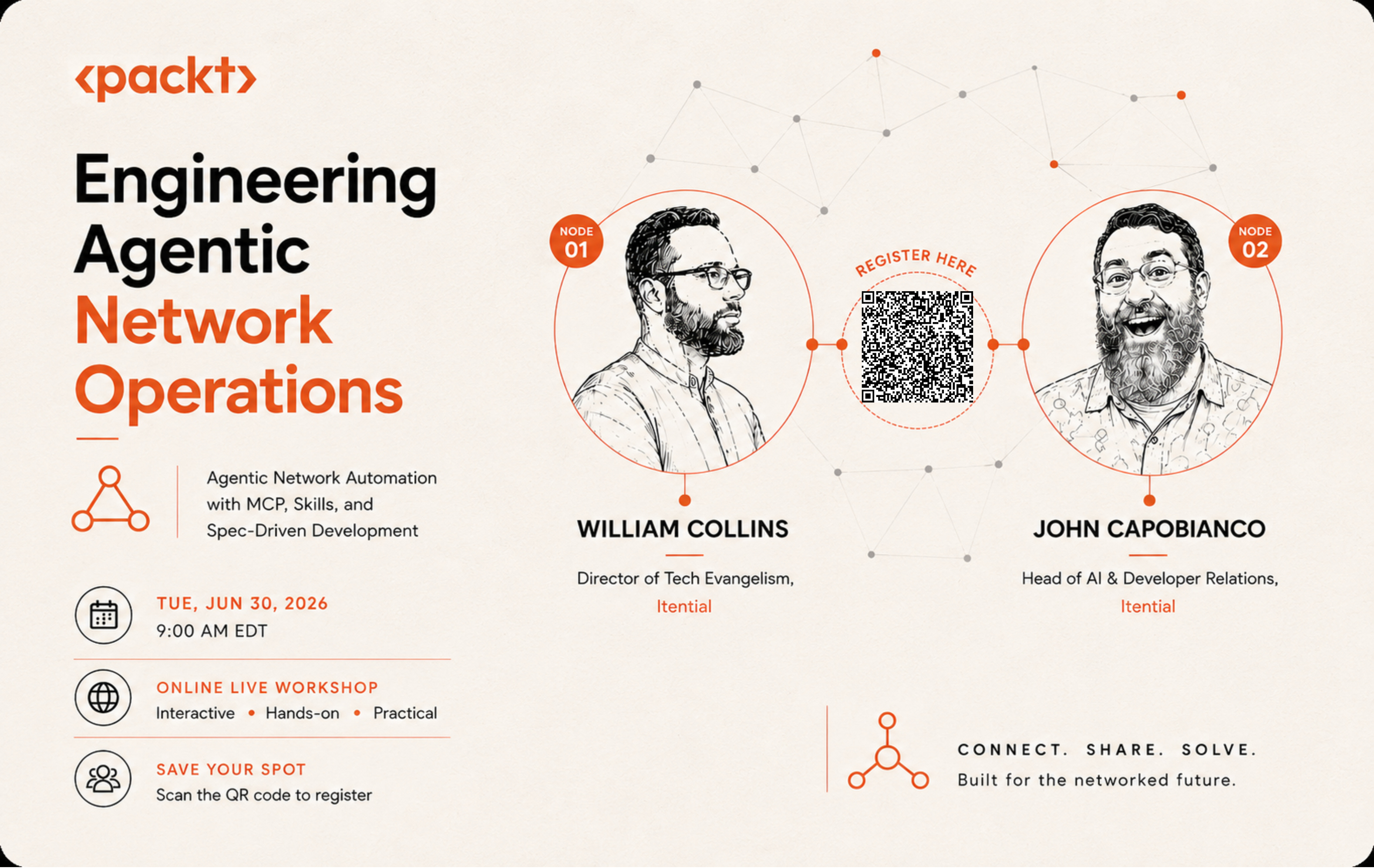
Sometimes, you’ve just got to build stuff. So why not join William Collins and John Capobianco for their upcoming talk on Engineering Agentic Network Operations? As a one of our lovely subscribers, you can also get a tasty discount as a thank you for your continued support - so make sure to make the most of the offer!
Why Open Source Matters for Cybersecurity Teams
Many popular AI coding environments are proprietary. While these tools may offer excellent developer experiences, they often introduce concerns regarding source code exposure, model transparency, and governance.
Cybersecurity organisations frequently operate under constraints that include:
Sensitive intellectual property
Regulated environments
Classified infrastructure
Customer confidentiality requirements
Internal security review processes
Open source AI tooling provides several advantages.
First, the codebase itself can be audited. Security teams can review how prompts are handled, how data is transmitted, and how permissions are enforced. Second, self-hosting becomes possible. Rather than transmitting source code to third-party services, organisations can operate AI systems within their own environments. Third, open source ecosystems typically integrate more naturally with existing security controls such as identity management, logging pipelines, container security platforms, and software composition analysis tools.
As a result, many cybersecurity teams are prioritising open architectures for AI-assisted development.
OpenHands: The Leading Open Source Coding Agent
Among current open source projects, one of the most significant developments is OpenHands.
OpenHands is an autonomous software engineering platform that allows AI agents to write code, execute commands, browse documentation, interact with repositories, and perform multi-step development tasks. Unlike traditional autocomplete systems, OpenHands functions as an agent capable of planning and executing complex workflows.
For cybersecurity professionals, this capability is particularly valuable. Consider the process of creating a new detection engineering pipeline. Rather than manually implementing every component, an analyst could instruct OpenHands to:
Build a log ingestion framework
Create Sigma rules
Generate test datasets
Implement validation scripts
Produce documentation
The agent can execute commands within controlled environments and iterate on failures until objectives are achieved. The academic literature surrounding OpenHands is notable because it emphasises several features directly relevant to security operations:
Sandboxed execution environments
Tool integration
Multi-agent coordination
Benchmark-driven evaluation
These characteristics make OpenHands one of the strongest foundations currently available for cybersecurity-focused vibe coding.
Continue.dev and AI-Enhanced IDE Workflows
While autonomous agents are valuable, many security practitioners prefer a more controlled development experience. This is where the open source project Continue.dev has gained traction. Continue operates inside familiar development environments such as VS Code and JetBrains IDEs while allowing developers to connect local or hosted LLMs.
Rather than delegating entire projects to an autonomous agent, Continue functions as a collaborative assistant. Users can:
Generate code
Refactor existing implementations
Explain unfamiliar codebases
Create tests
Review security-sensitive functions
This model aligns well with security engineering because it keeps humans directly involved in implementation decisions. For example, a detection engineer developing a SIEM integration can request code suggestions while retaining complete control over repository modifications.
Continue also integrates effectively with locally hosted models, reducing concerns around source code exposure. For organisations operating under strict governance requirements, this hybrid approach often represents a practical first step toward AI-assisted development.
Aider and Terminal-Centric Security Development
Many cybersecurity professionals spend substantial portions of their day in terminals rather than graphical IDEs. For these users, Aider has emerged as one of the most effective open source tools.
Aider operates directly from the command line and allows developers to use AI models to modify existing repositories. Unlike traditional chat interfaces, Aider understands repository structure and applies changes directly to tracked files. Several characteristics make Aider particularly useful in cybersecurity environments:
First, it integrates naturally with Git workflows.
Second, it preserves visibility into every modification.
Third, it supports iterative review processes that align with secure development methodologies.
A penetration tester, for example, might use Aider to extend an internal reconnaissance tool, generate additional protocol parsers, or automate repetitive data processing tasks.
Because all changes remain visible through conventional version-control workflows, security review processes remain intact. This transparency is critical when generated code may eventually interact with production systems.
Open Interpreter and Security Automation
Another important open source project is Open Interpreter. Open Interpreter enables natural-language interaction with local computing environments. Instead of merely generating code, it can execute commands and perform actions on behalf of the user.
For cybersecurity teams, this capability enables rapid automation. An analyst might issue instructions such as:
Parse all firewall logs from the previous week.
Extract unique source addresses.
Perform threat intelligence enrichment.
Generate a CSV report.
The system can coordinate these activities without requiring the user to manually construct every script. This capability moves vibe coding beyond software development and into operational security workflows.
However, because Open Interpreter interacts directly with system resources, organisations must carefully implement permission boundaries, sandboxing mechanisms, and audit logging.
Local Model Infrastructure with Ollama
Open source vibe coding becomes significantly more attractive when paired with locally hosted models. Among available solutions, Ollama has become one of the most widely adopted.
Ollama provides a straightforward mechanism for running large language models on local hardware. Rather than sending code to external providers, organisations can deploy models internally and connect them to other tools.
This architecture provides several cybersecurity advantages:
Sensitive repositories remain within organisational boundaries.
Prompt data remains under local control.
Audit and monitoring requirements become easier to satisfy.
For highly regulated sectors such as defence, healthcare, and financial services, local model deployment often represents the most realistic path toward enterprise adoption of vibe coding practices.
Agent Frameworks for Security Engineering
As organisations mature their AI development capabilities, individual coding assistants often evolve into agent ecosystems. Several open source frameworks support this transition. Notable examples include:
These frameworks enable developers to create specialised agents with distinct responsibilities. Within a cybersecurity context, organisations may create:
Vulnerability analysis agents
Secure code review agents
Threat intelligence agents
Compliance validation agents
Infrastructure hardening agents
Rather than relying on a single monolithic assistant, teams can orchestrate multiple agents performing specialised functions. This approach aligns closely with modern security operations, where workflows already involve numerous specialised tools and analysts.
Security Risks Associated with Vibe Coding
The benefits of AI-assisted development should not obscure the risks. Research consistently demonstrates that AI-generated code may contain vulnerabilities. Recent studies have found that a substantial proportion of generated code includes security weaknesses, even when produced by advanced models.
More concerningly, researchers have identified vulnerabilities affecting AI-enabled development environments themselves. Investigations into AI-assisted IDEs uncovered numerous security issues, including prompt injection pathways, data leakage opportunities, and remote code execution scenarios. These findings suggest that AI development environments must be evaluated as part of an organization’s attack surface.
For cybersecurity practitioners, this means AI-generated code cannot bypass established review processes. Generated code should be subjected to:
Static application security testing
Dynamic analysis
Dependency scanning
Manual review
Threat modeling
Vibe coding accelerates implementation, but it does not eliminate the need for security engineering.
Integrating Open Source Vibe Coding into Secure Development Lifecycles
The most effective cybersecurity teams are treating AI-assisted development as an enhancement to existing secure development practices rather than a replacement. A mature workflow typically follows several stages:
An AI assistant generates initial implementations.
Developers review architectural decisions.
Automated security scanning evaluates the output.
Peer review validates security assumptions.
Continuous integration pipelines enforce policy requirements.
Deployment proceeds only after conventional validation processes are completed.
This approach aligns closely with NIST guidance regarding secure software development for AI-enabled systems.
In practice, organisations that successfully adopt vibe coding rarely eliminate human oversight. Instead, they are shifting human effort away from repetitive implementation tasks and toward validation, architecture, and risk management.
Ready to start?
Vibe coding is becoming a significant component of modern cybersecurity engineering. The ability to express intent in natural language and rapidly generate software creates substantial productivity gains for security analysts, detection engineers, penetration testers, and DevSecOps teams.
Among open source options, OpenHands currently represents the most capable autonomous coding platform, while Continue.dev and Aider provide strong human-in-the-loop alternatives. Open Interpreter expands AI assistance into operational automation, and Ollama enables local deployment strategies that satisfy stringent security requirements. Agent frameworks such as AutoGen, LangGraph, and CrewAI further extend these capabilities into complex security workflows.
The key challenge is not whether these tools can generate code. They clearly can. The challenge is ensuring that the generated code meets the standards expected in security-critical environments. Organisations that combine open source AI tooling with established secure development practices, rigorous code review, automated security testing, and strong governance controls will be best positioned to benefit from vibe coding while minimising its associated risks.
References and Further Reading
NIST. Secure Software Development Practices for Generative AI and Dual-Use Foundation Models: An SSDF Community Profile (2024)
Wang et al. OpenHands: An Open Platform for AI Software Developers as Generalist Agents (2024)
Wang et al. The OpenHands Software Agent SDK (2025)
Alwageed & Khan. The Role of Generative AI in Strengthening Secure Software Coding Practices (2025)
Díaz Ferreyra et al. Security Concerns in Generative AI Coding Assistants (2026)
This issue was brought to you by JupiterOne.